And How Scaling Brands Break Through with Systems (Not Bigger Budgets)
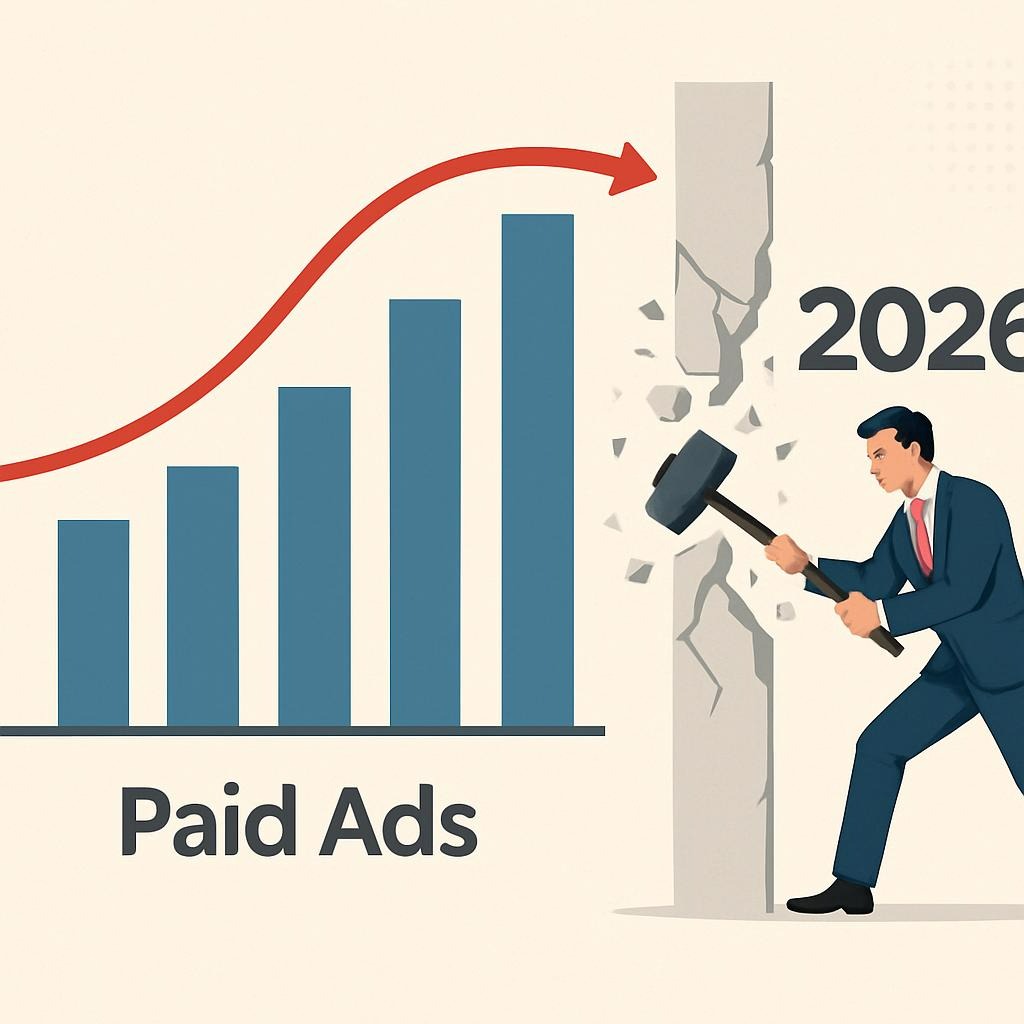
Most brands don’t hit a paid ads ceiling.
They hit a system ceiling.
At first, ads work.
ROAS looks strong.
Revenue grows.
Then something breaks:
- CPAs rise
- Creative fatigue accelerates
- Incremental revenue slows
- Scaling feels harder than starting
Most teams react by:
- Increasing budgets
- Launching more creatives
- Switching platforms
- Blaming Meta, Google, or the algorithm
At ScaleOps Studio, we see a different pattern:
Paid media doesn’t plateau because of ads.
It plateaus because growth is not systemized.
This article explains:
- Why paid ads always plateau without a system
- What the data actually shows at scale
- Where AI helps — and where it doesn’t
- How to build a scalable paid growth system that compounds
The Real Reason Paid Ads Plateau (And It’s Not the Algorithm)
Paid ads are not a growth engine on their own.
They are a demand amplifier.
Once you hit scale, ads expose every weakness in your business:
- Weak positioning
- Poor conversion flow
- Misaligned messaging
- Fragile funnels
- Missing retention loops
Why this happens today
- Platforms optimize for engagement, not your margins
- Competition increases faster than efficiency
- Creative cycles shorten dramatically
- Marginal returns shrink at higher spend levels
At small budgets, inefficiencies hide.
At scale, they surface brutally.
Why Traditional Paid Media “Optimization” Fails
Most teams focus on:
- Bid tweaks
- Audience changes
- Creative volume
- Platform features
This works temporarily — not structurally.
3 reasons this fails at scale
1. Ads are optimized in isolation
Most brands optimize ads separately from:
- Landing pages
- Funnels
- CRM logic
- Retention flows
This breaks compounding growth.
2. Creative is disconnected from strategy
Creatives are produced fast, but without:
- Clear messaging frameworks
- Funnel-stage intent
- Psychological sequencing
Result: more ads, same ceiling.
3. Conversion is treated as “post-click”
At scale, conversion IS acquisition.
If your funnel doesn’t evolve, ads stall.
What the Data Shows at Scale (Reality Check)
From real-world scaling accounts:
Typical paid media patterns
- CPA increases 20–60% after initial scale
- ROAS stabilizes, then slowly declines
- Creative fatigue hits in weeks, not months
- Retargeting caps faster than expected
The real bottleneck
Not traffic.
Not platforms.
The bottleneck is system throughput:
- How efficiently traffic converts
- How fast learnings loop back into creatives
- How acquisition feeds retention
- How AI supports decision-making
Where AI Actually Helps Paid Growth (And Where It Doesn’t)
AI works best for:
- Creative iteration & testing velocity
- Pattern recognition across campaigns
- Funnel personalization
- Budget allocation insights
- Attribution modeling support
AI fails when used as:
- A strategy replacement
- A creative “idea machine” without context
- A fix for weak offers
- A shortcut around fundamentals
AI accelerates systems.
It cannot replace them.
Introducing the ScaleOps Growth System™ (Paid Media Edition)
Paid ads scale when every layer supports acquisition.
Layer 1: Strategy Layer
Before spending more:
- Clear ICP & demand clarity
- Offer-market alignment
- Messaging hierarchy
- Channel role definition
If strategy is weak, spend amplifies losses.
Layer 2: Acquisition Layer
Ads are designed as:
- Intent capture (not interruption only)
- Message sequencing across touchpoints
- Channel orchestration, not silos
This creates predictable acquisition.
Layer 3: Conversion Layer
We optimize:
- Landing page logic
- Funnel flow
- Micro-conversions
- Objection handling
At scale, conversion efficiency beats traffic volume.
Layer 4: Automation & AI Layer
Here AI creates leverage:
- Creative testing frameworks
- Performance diagnostics
- Funnel personalization
- CRM-triggered flows
Speed + intelligence = scale.
Layer 5: Scaling & Optimization Layer
Growth compounds when:
- Paid feeds owned channels
- Learnings loop fast
- Retention supports acquisition
- Attribution is clear
This is where brands break plateaus.
Why “More Budget” Is the Wrong Answer
Increasing spend without fixing systems:
- Raises CPAs
- Increases volatility
- Masks real issues
- Creates fragile growth
Scaling brands don’t ask:
“How do we spend more?”
They ask:
“How do we convert better, faster, and repeatedly?”
Who This Works For (And Who It Doesn’t)
Best fit:
- E-commerce brands scaling past €50k/month
- SaaS with validated demand
- Agencies managing serious ad spend
- Founders seeking predictable growth
Not a fit:
- Early validation stages
- “Test ads and see” mindsets
- Brands unwilling to fix funnels
- Short-term ROAS chasers
What to expect:
- Structural changes, not quick hacks
- Clear KPIs beyond ROAS
- Weeks of setup, months of compounding returns
How We Convert Without Pushing
We embed conversion naturally:
Soft CTA
Get our Paid Ads Plateau Diagnostic Checklist
→ Identify where your system breaks.
Primary CTA
Book a Paid Growth Strategy Call
→ Get a system-level scaling roadmap.
Secondary CTA
Talk to us about:
- Paid media systems
- Funnel optimization
- AI-supported scaling
- Full-funnel growth architecture
The Takeaway
Paid ads don’t scale by:
- More creatives
- More platforms
- More budget
They scale through systems.
Brands that win:
- Treat paid as part of a growth engine
- Align acquisition with conversion
- Use AI as leverage, not a crutch
- Build for compounding efficiency
At ScaleOps Studio, we don’t “optimize ads.”
We build paid growth systems that scale profitably.
FAQ: Paid Ads & Scaling
Why do paid ads plateau?
Because systems don’t scale as fast as spend.
Can AI fix paid ads performance?
Only if fundamentals and funnels are solid.
Is ROAS still relevant?
Yes — but incomplete. Contribution margin matters more.
How long does it take to fix a plateau?
Typically 4–8 weeks to see structural improvement.
Does this replace SEO?
No. Paid + organic systems reinforce each other.
🚀 Ready to Break Your Paid Ads Plateau?
Book a Paid Growth Strategy Call
Let’s diagnose:
- Where performance breaks
- What limits scale
- How to fix it systemically
👉 Scale with structure. Not spend.
Leave a Reply